User Research
We conducted one interview with one high school student (Andie) and one agent, who we named Emily (Navigator🐊).
Students understand science better when they can test it by making something that works or fails.
AI is most effective when it helps students translate their ideas into games rather than doing the thinking for them.
Learning engagement drops when activities feel like “educational games” instead of real games.
Students prefer clear concept grounding before game creation.
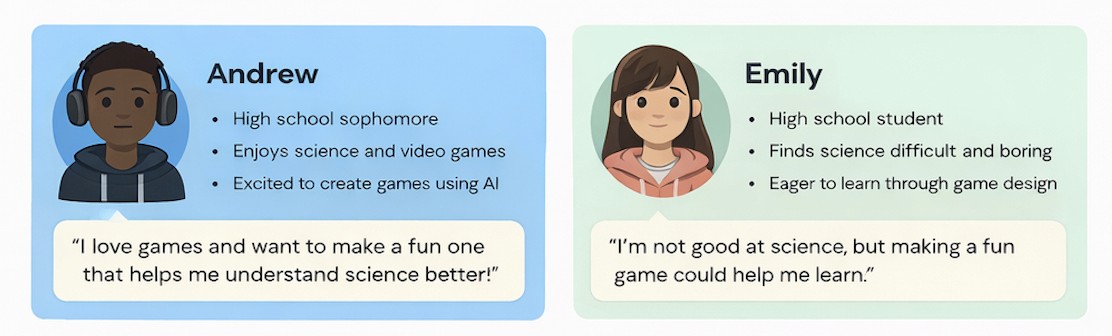
Meet Our Users
These personas represent two learners who engage with science through game creation, ranging from a student already motivated by games to another who struggles with traditional science instruction.
Storyboards
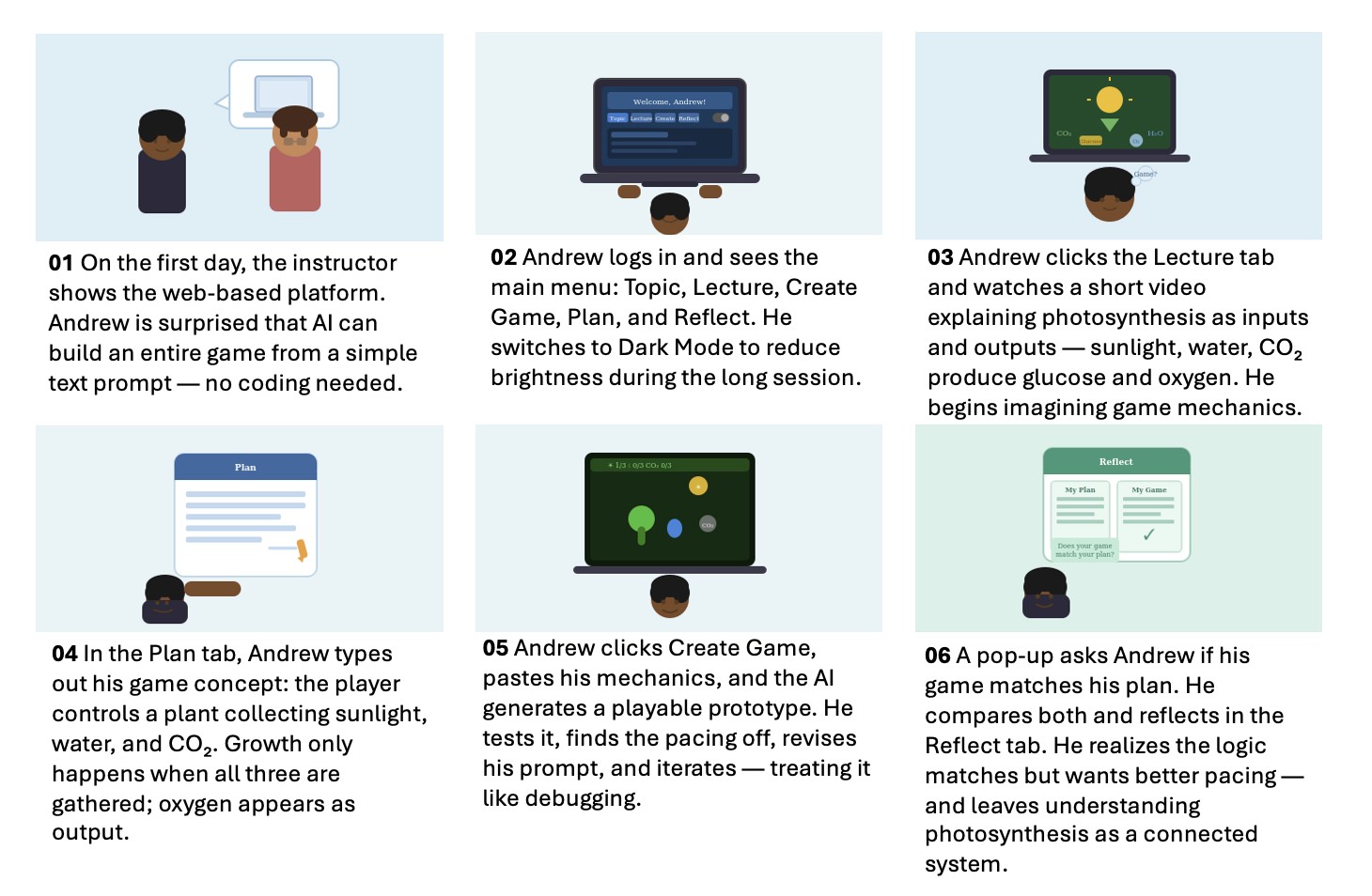
The storyboard illustrates Andrew’s end-to-end learning journey, showing how structured stages, AI support, and reflection help him translate scientific concepts into a playable game and deeper conceptual understanding.