AI Tools Teacher Training Course
Blended AI training program designed for in-service teachers.
About the project
This project was developed for EME 6606 Advanced Instructional Design as a blended professional development course to support in-service teachers’ adoption of AI tools. The course was designed by Peter Disabb, Deniz Ercan, Hannah Lee, Chip Li, and Hyunju Oh using a Learning Experience Design approach.
AI Tools Teacher Training Course
Blended AI training program designed for in-service teachers.
About the project
This project was developed for EME 6606 Advanced Instructional Design as a blended professional development course to support in-service teachers’ adoption of AI tools. The course was designed by Peter Disabb, Deniz Ercan, Hannah Lee, Chip Li, and Hyunju Oh using a Learning Experience Design approach.
Articulate Rise Prototype
About Project
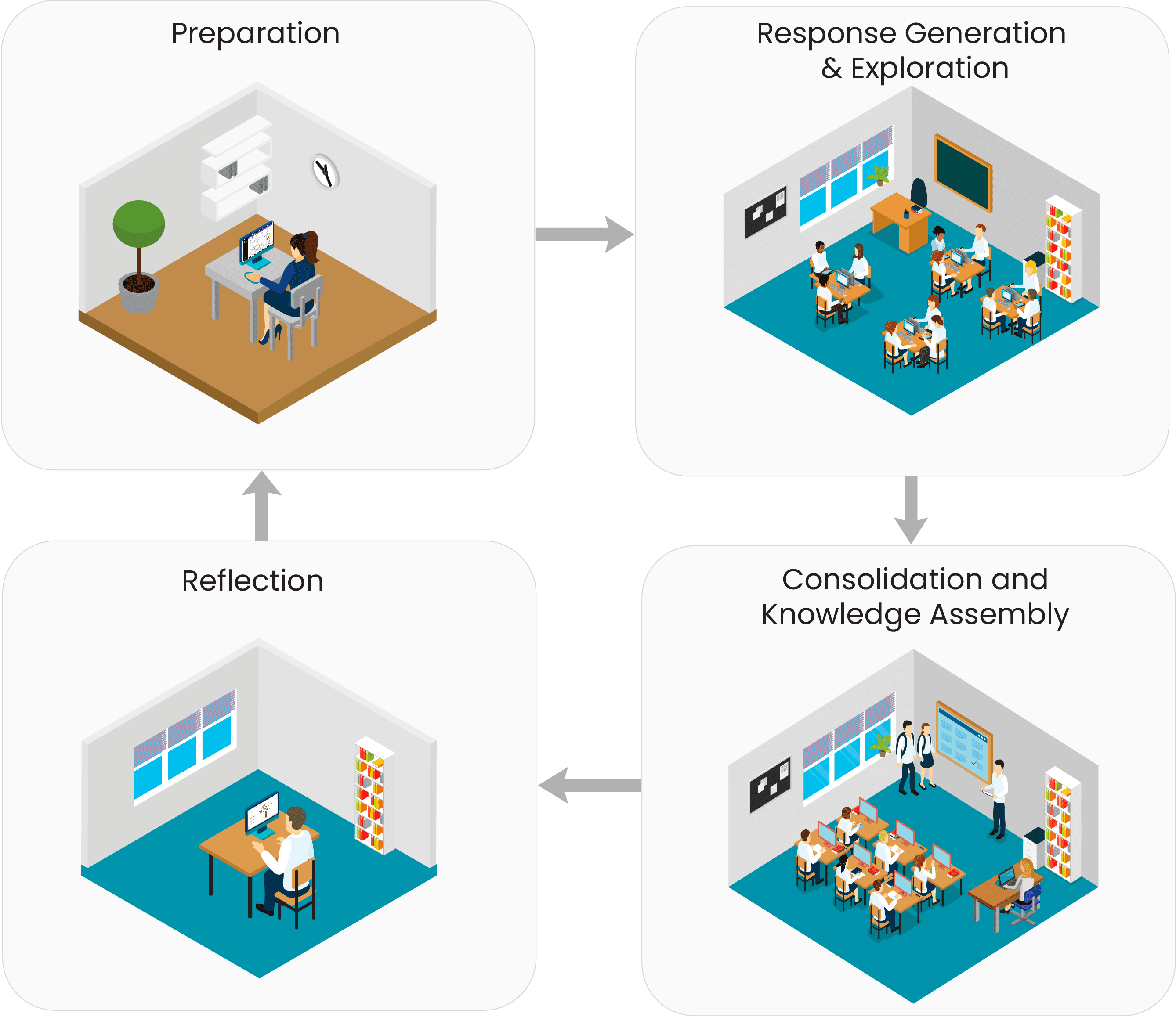
ProductiveMath is a Gates Foundation funded AI platform designed to help teachers bring productive failure into middle school algebra classrooms. Instead of giving students direct instruction first, productive failure invites them to explore challenging problems, test ideas, make mistakes, and learn through discussion.
The platform helps teachers create story-based algebra problems, adjust difficulty, anticipate student misconceptions, and prepare classroom discussion support while keeping teachers in control of the final design.
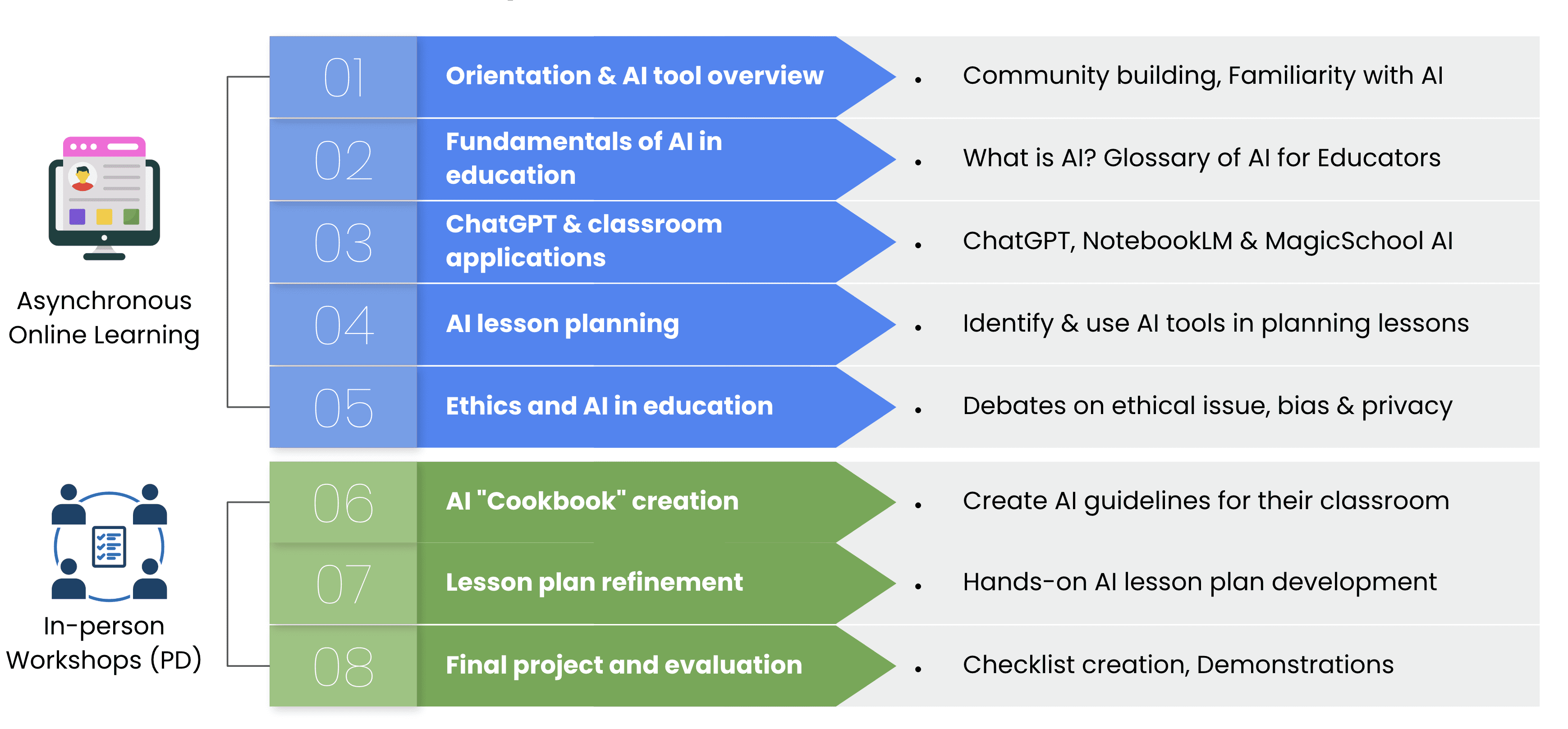
The training combines asynchronous online learning with in-person professional development activities, so teachers can first build foundational knowledge and then apply AI tools through hands-on practice.
The training combines asynchronous online learning with in-person professional development activities, so teachers can first build foundational knowledge and then apply AI tools through hands-on practice.
About Project
The training combines asynchronous online learning with in-person professional development activities, so teachers can first build foundational knowledge and then apply AI tools through hands-on practice.
The training combines asynchronous online learning with in-person professional development activities, so teachers can first build foundational knowledge and then apply AI tools through hands-on practice.
The platform helps teachers create story-based algebra problems, adjust difficulty, anticipate student misconceptions, and prepare classroom discussion support while keeping teachers in control of the final design.
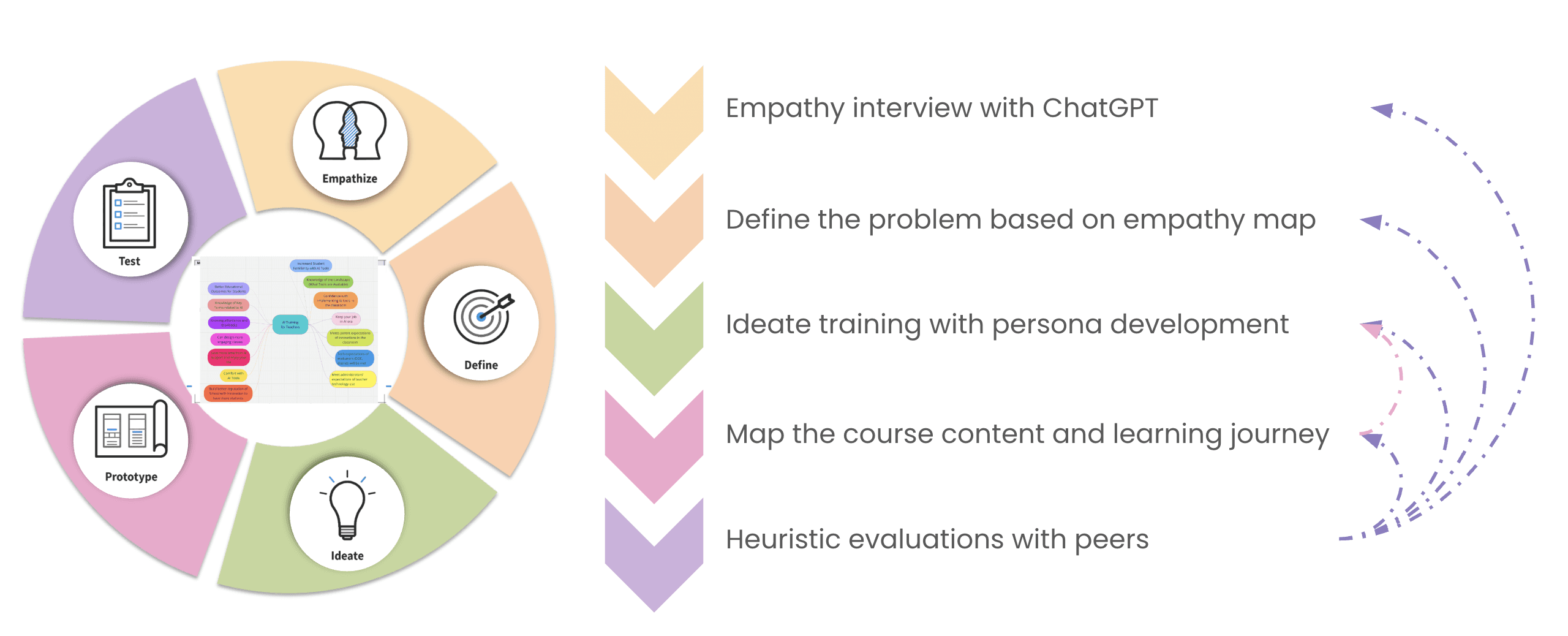
Using a Learning Experience Design approach, we followed a design thinking process that included empathy work, problem definition, persona development, course journey mapping, prototyping, and peer heuristic evaluation.
Materials
Course Map
Planning document that outlines the structure, learning sequence, objectives, activities, and assessment flow for the blended AI tools teacher training course.Learner Characteristics
Design document describing the target learners, their teaching context, prior AI experience, needs, motivations, and possible barriers to AI adoption.Final Presentation
Slide deck summarizing the project goal, design process, blended training structure, and final instructional design solution.
Materials
Course Map
Planning document that outlines the structure, learning sequence, objectives, activities, and assessment flow for the blended AI tools teacher training course.Learner Characteristics
Design document describing the target learners, their teaching context, prior AI experience, needs, motivations, and possible barriers to AI adoption.Final Presentation
Slide deck summarizing the project goal, design process, blended training structure, and final instructional design solution.
Course Map
Planning document that outlines the structure, learning sequence, objectives, activities, and assessment flow for the blended AI tools teacher training course.Learner Characteristics
Design document describing the target learners, their teaching context, prior AI experience, needs, motivations, and possible barriers to AI adoption.Final Presentation
Slide deck summarizing the project goal, design process, blended training structure, and final instructional design solution.
Using a Learning Experience Design approach, we followed a design thinking process that included empathy work, problem definition, persona development, course journey mapping, prototyping, and peer heuristic evaluation.
Using a Learning Experience Design approach, we followed a design thinking process that included empathy work, problem definition, persona development, course journey mapping, prototyping, and peer heuristic evaluation.