Gamerate
The platform guides learners from idea generation to game creation and reflection, making science learning more interactive, creative, and student-centered.
About the project
Gamerate was designed for the EME6065 Human-Computer Interaction course. The project explores how students can learn science through AI-supported game creation. Students use the platform to plan, create, test, and revise games based on science concepts.
Gamerate
The platform guides learners from idea generation to game creation and reflection, making science learning more interactive, creative, and student-centered.
The platform guides learners from idea generation to game creation and reflection, making science learning more interactive, creative, and student-centered.
About the project
Gamerate was designed for the EME6065 Human-Computer Interaction course. The project explores how students can learn science through AI-supported game creation. Students use the platform to plan, create, test, and revise games based on science concepts. The design focuses on accessibility, creativity, and meaningful interaction, allowing students to create games without coding while connecting science learning to playable experiences.
Gamerate was designed for the EME6065 Human-Computer Interaction course. The project explores how students can learn science through AI-supported game creation. Students use the platform to plan, create, test, and revise games based on science concepts.
Prototype Preview
About Research
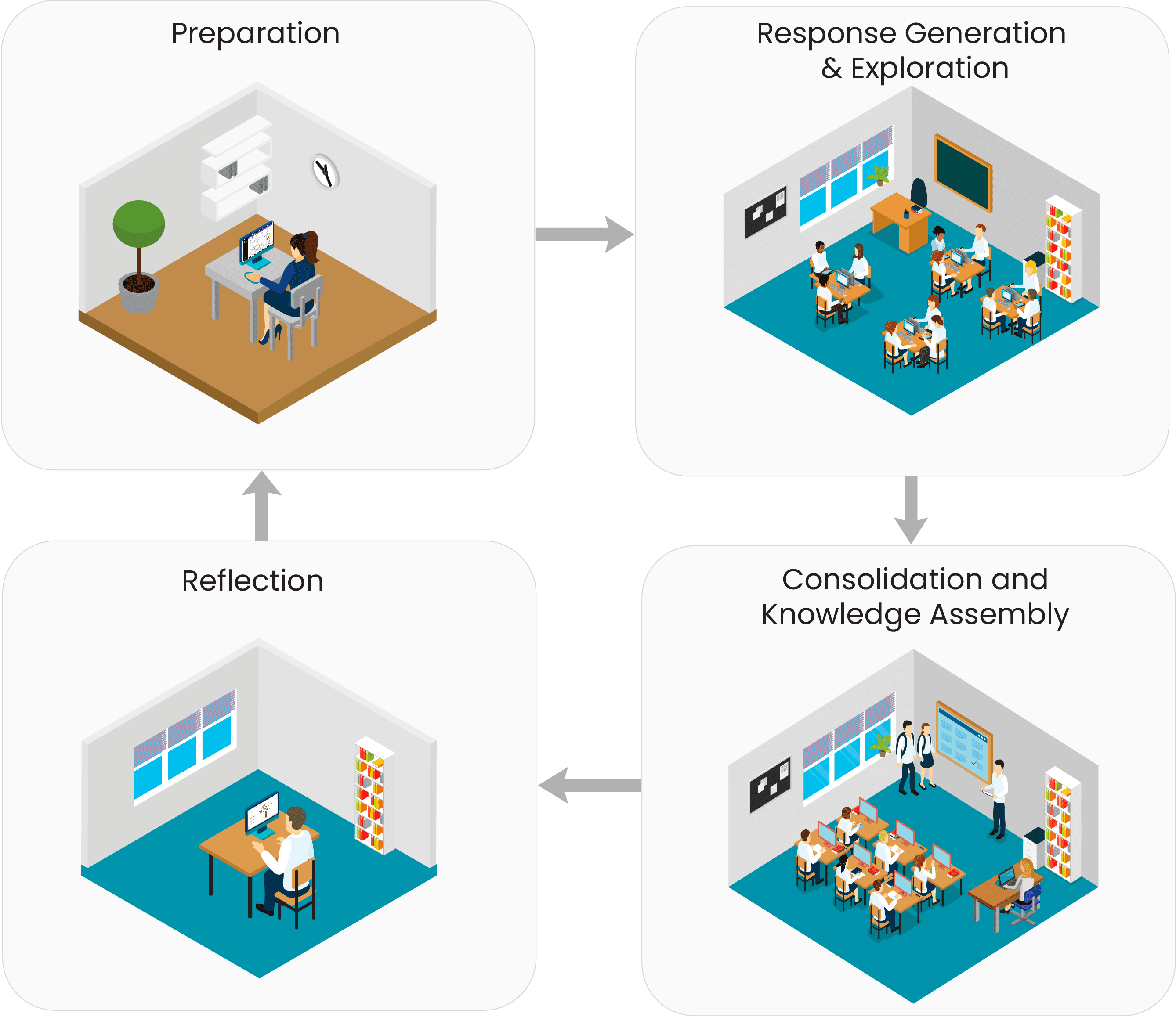
ProductiveMath is a Gates Foundation funded AI platform designed to help teachers bring productive failure into middle school algebra classrooms. Instead of giving students direct instruction first, productive failure invites them to explore challenging problems, test ideas, make mistakes, and learn through discussion.
The platform helps teachers create story-based algebra problems, adjust difficulty, anticipate student misconceptions, and prepare classroom discussion support while keeping teachers in control of the final design.
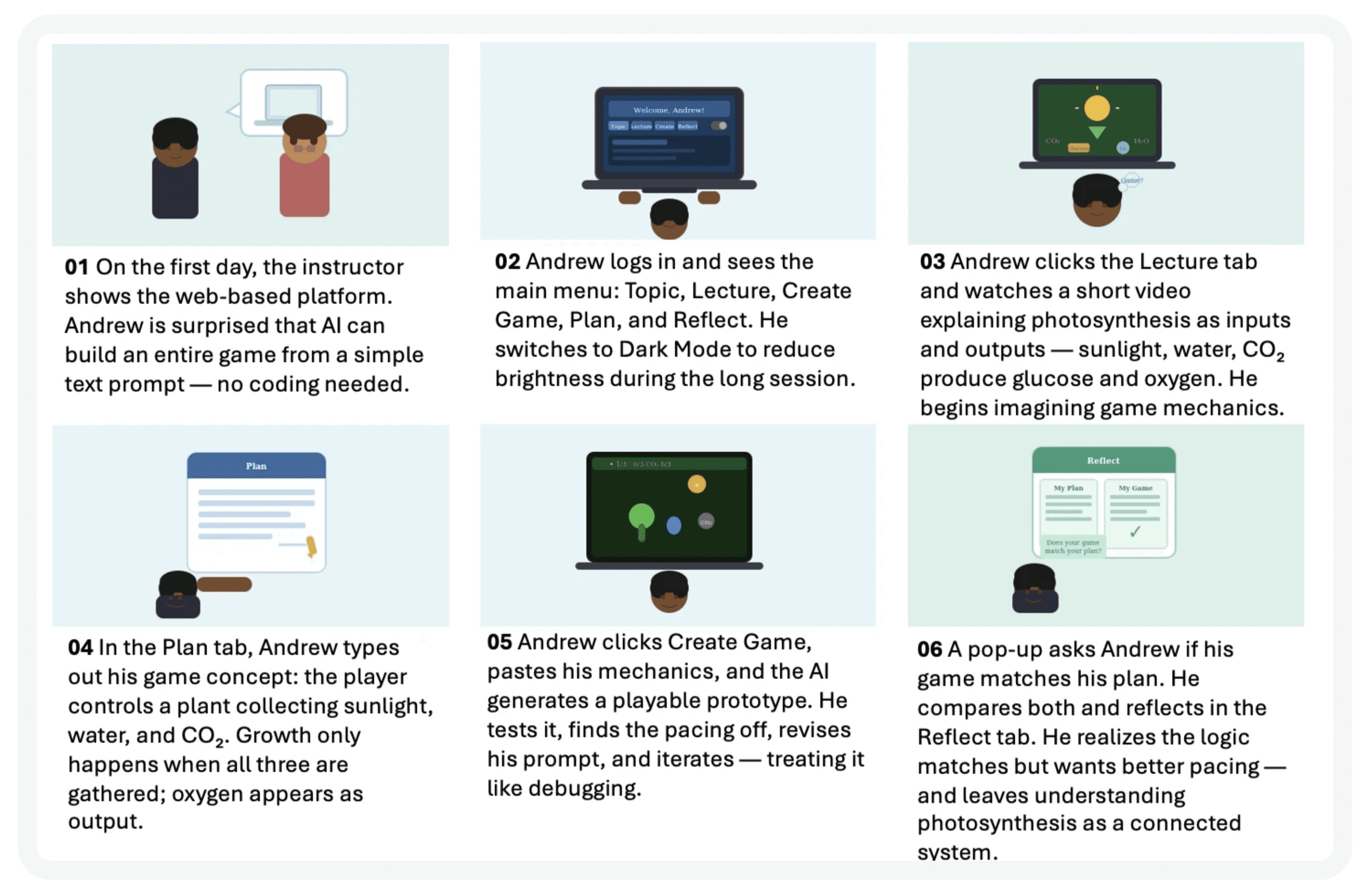
The project began with a problem in science learning: students often see science as disconnected from real life, and many digital tools still position them as passive users rather than active creators.
To understand this problem, we interviewed high school students and used their feedback to shape the design. Based on the interviews, we developed personas, storyboards, and both low-fidelity and high-fidelity prototypes.
The project began with a problem in science learning: students often see science as disconnected from real life, and many digital tools still position them as passive users rather than active creators.
To understand this problem, we interviewed high school students and used their feedback to shape the design. Based on the interviews, we developed personas, storyboards, and both low-fidelity and high-fidelity prototypes.
The project began with a problem in science learning: students often see science as disconnected from real life, and many digital tools still position them as passive users rather than active creators.
To understand this problem, we interviewed high school students and used their feedback to shape the design. Based on the interviews, we developed personas, storyboards, and both low-fidelity and high-fidelity prototypes.
The project began with a problem in science learning: students often see science as disconnected from real life, and many digital tools still position them as passive users rather than active creators.
To understand this problem, we interviewed high school students and used their feedback to shape the design. Based on the interviews, we developed personas, storyboards, and both low-fidelity and high-fidelity prototypes.
The project began with a problem in science learning: students often see science as disconnected from real life, and many digital tools still position them as passive users rather than active creators.
To understand this problem, we interviewed high school students and used their feedback to shape the design. Based on the interviews, we developed personas, storyboards, and both low-fidelity and high-fidelity prototypes.
The project began with a problem in science learning: students often see science as disconnected from real life, and many digital tools still position them as passive users rather than active creators.
The project began with a problem in science learning: students often see science as disconnected from real life, and many digital tools still position them as passive users rather than active creators.
The project began with a problem in science learning: students often see science as disconnected from real life, and many digital tools still position them as passive users rather than active creators.
To understand this problem, we interviewed high school students and used their feedback to shape the design. Based on the interviews, we developed personas, storyboards, and both low-fidelity and high-fidelity prototypes.
About Research
The project began with a problem in science learning: students often see science as disconnected from real life, and many digital tools still position them as passive users rather than active creators.
To understand this problem, we interviewed high school students and used their feedback to shape the design. Based on the interviews, we developed personas, storyboards, and both low-fidelity and high-fidelity prototypes.
The final design helps students move through a full learning cycle: exploring a science topic, planning a game idea, generating a playable game with AI support, testing it, and reflecting on how the game represents the science concept.
The project began with a problem in science learning: students often see science as disconnected from real life, and many digital tools still position them as passive users rather than active creators.
To understand this problem, we interviewed high school students and used their feedback to shape the design. Based on the interviews, we developed personas, storyboards, and both low-fidelity and high-fidelity prototypes.
Materials
Live Project Website
Full Gamerate HCI project page with the problem, research background, design process, user modeling, and prototype sections.Background Research
Research context explaining the science learning problem, lack of real-life relevance, and passive use of digital technologies.Affordance Analysis
Analysis of how existing tools support or limit students’ ability to plan, create, test, and reflect through science game creation.Student Interviews
High school student interviews used to understand learner needs, interests, frustrations, and expectations for AI-supported game creation.Scenarios
User scenarios showing how students might use Gamerate to explore science topics, create games, test ideas, and reflect on learning.Figma Prototypes
Low-fidelity and high-fidelity Figma prototypes created to test and refine the Gamerate learning flow, navigation, and final interface design.
Live Project Website
Full Gamerate HCI project page with the problem, research background, design process, user modeling, and prototype sections.Background Research
Research context explaining the science learning problem, lack of real-life relevance, and passive use of digital technologies.Affordance Analysis
Analysis of how existing tools support or limit students’ ability to plan, create, test, and reflect through science game creation.Student Interviews
High school student interviews used to understand learner needs, interests, frustrations, and expectations for AI-supported game creation.Scenarios
User scenarios showing how students might use Gamerate to explore science topics, create games, test ideas, and reflect on learning.Figma Prototypes
Low-fidelity and high-fidelity Figma prototypes created to test and refine the Gamerate learning flow, navigation, and final interface design.
Materials
Live Project Website
Full Gamerate HCI project page with the problem, research background, design process, user modeling, and prototype sections.Background Research
Research context explaining the science learning problem, lack of real-life relevance, and passive use of digital technologies.Affordance Analysis
Analysis of how existing tools support or limit students’ ability to plan, create, test, and reflect through science game creation.Student Interviews
High school student interviews used to understand learner needs, interests, frustrations, and expectations for AI-supported game creation.Scenarios
User scenarios showing how students might use Gamerate to explore science topics, create games, test ideas, and reflect on learning.Figma Prototypes
Low-fidelity and high-fidelity Figma prototypes created to test and refine the Gamerate learning flow, navigation, and final interface design.
Live Project Website
Full Gamerate HCI project page with the problem, research background, design process, user modeling, and prototype sections.Background Research
Research context explaining the science learning problem, lack of real-life relevance, and passive use of digital technologies.Affordance Analysis
Analysis of how existing tools support or limit students’ ability to plan, create, test, and reflect through science game creation.Student Interviews
High school student interviews used to understand learner needs, interests, frustrations, and expectations for AI-supported game creation.Scenarios
User scenarios showing how students might use Gamerate to explore science topics, create games, test ideas, and reflect on learning.Figma Prototypes
Low-fidelity and high-fidelity Figma prototypes created to test and refine the Gamerate learning flow, navigation, and final interface design.